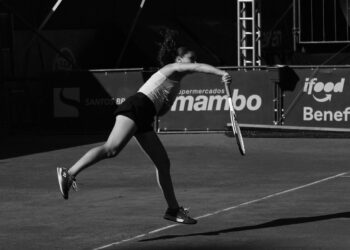





The free throw line with just two seconds to go. The penalty kick in overtime. The final approach to a vault. These are the moments when the wrong thought can derail your performance and the right one can turn everything around. Elite athletes know that they can’t just leave this to chance – they use focus cues, which are usually three word phrases that instantly shift their minds from chaos to clarity.
The Science Behind Simplicity
Your conscious mind can only process about 120 bits of info per second – roughly the same as understanding one person talking to you. When you’re in competition, anxiety starts flooding that limited bandwidth with all sorts of fears, doubts and what-ifs. Focus cues work by grabbing your conscious mind with something useful and preventing all those destructive thoughts from taking hold.
Three words are just right. One word just isn’t enough – it feels unfinished. Four or more and you’ve got yet something else to remember. Three words create a rhythm, stick in your memory and can even be processed even when you’re under huge pressure. The brain scans show that simple, repeated phrases kick start the motor cortex and quiet down the anxiety centers – literally re-wiring your neural pathways in real time.
The Different Types of Focus Cues
Technical Cues focus in on specific mechanics. A basketball player might use “elbow, wrist, follow-through” when shooting. A swimmer thinks “reach, catch, pull” when they’re in the water. These work best when you’re in practice or you are specifically trying to fix a technical issue. But, when you are under extreme pressure, these type of focus technical cues might cause you to think too much during your athletic performance. So, be careful of this potential downfall.
Rhythm Cues get you to a good timing and flow. “Smooth, smooth, explode” for a triple jumper. “Load, wait, fire” for a baseball hitter. These are good when your sport needs precise timing or when you tend to rush under pressure. The repetition creates a mental metronome that can override your body’s urge to speed up because of adrenaline.
Mindset Cues change your mental state rather than your mechanics. “I love this” reminds you why you compete in the first place. “Be here now” brings you back to the present. “Trust your training” stops you overthinking. These work when your technique isn’t the problem – it’s your confidence that’s lacking. And they’re especially good when you’re in competition and thinking about mechanics just makes things worse.
Creating Your Focus Cues
Your cues need to really speak to you. One cue will work like a charm for one athlete – and make another athlete tense. So start by figuring out your biggest weakness. Do you rush into things? Try “patient, patient, attack”. Do you overthink? Use “see it, feel it, do it”. Do you get tight? Consider “loose, long, strong”.
Test these out in practice before you actually need them in competition. When you get it right, it will feel like a key turning in a lock – everything just simplifies. You may need different cues in different situations – one for serving in tennis, another for returning. World-class athletes often have a library of 3-5 cues that they cycle through depending on what they need.
Putting It Together
Start using your cue in low-key practice. Say it to yourself as you’re going through the motion. Once it feels natural, move on to a bit more pressure – like a scrimmage or a time trial. And only after you’ve got it down pat should you trust it to help you in competition.
Get your cue linked to a physical trigger. Touch your hip before a gymnastics routine while thinking “strong, tight, stick”. Tap your bat on home plate before you hit while thinking “see ball, hit ball”. This physical/mental connection will make the cue even more powerful when you’re under a lot of stress.
The Shift in Thinking
Modern sports psychology has moved from “don’t even think about it” to “think about the right thing”. Focus cues give you something to think about that will actually help. Next time you see an NBA player about to take a crucial free throw, don’t think they’re clearing their minds. They’re filling them with practiced thoughts that are going to help them perform.
The world’s top athletes make it look easy, but behind that calm exterior is usually a carefully chosen three word phrase getting all the real work done. Your cue is your anchor, your reset button, your competitive edge. In a sport where milliseconds and millimeters can make all the difference, the right three words can be the difference between winning and losing.