



So, you’ve finally decided to take up the piano. Now what? Now, it’s time to invest in a decent keyboard to practice on. But good luck deciding because there are many choices and the prices can range from around $80 all the way up to an eye-watering $8,000. Also, if you’re not already a musician, then the jargon on the manufacturer’s product specification sheets might as well be written in another language.
But don’t worry, you’re not the only one. Piano is still the most popular instrument for people taking up an instrument. Recent surveys have backed this up. A 2021 survey conducted by the Associated Board of the Royal Schools of Music (ABRSM) found that no less than 69% of music teachers were teaching piano. This figure eclipsed the numbers for all other musical instruments. And, it’s no surprise that at the same time, sales of digital keyboards had leaped up by 24%, as a whole bunch of new players had discovered just how much fun playing a keyboard can be.
Here are a few tips to help you choose the right keyboard for you and your first foray into the world of piano playing:
How Much Should You Be Willing To Spend?
Generally speaking, most beginners will find that their money is well spent at about the $150 to $400 mark.
Spend less than $150 and you’re likely to end up with a keyboard that’s more of a toy than a musical creation tool. The keys will probably be rubbish, the sound tinny, and the overall experience so frustrating that you’ll probably be put off for piano playing for good.
On the other hand, if you spend over $500, you are probably just throwing money away on features that you won’t fully appreciate yet. These are things like fancy sound libraries, advanced connectivity, and a bunch of other things that you likely don’t need to be distracted by, yet.
An approximately $250 keyboard will probably be all you need for a full year of learning without holding you back, which can have the dual effect of saving your money for later when you might know exactly what you’re looking for in a keyboard.
How Much to Spend
Less than $150: Honestly, not a great idea, as you’ll probably find the keys are flimsy, the sound is poor, and the learning experience is basically a waste of time.
$150 – $300: Now we’re talking. You’ll find that you can get a keyboard with decent touch sensitivity, reasonable enough sound, and enough features to actually learn properly on.
$300-500: This is the serious beginner range. Weighted or semi-weighted keys, much better piano samples, and a build quality that should last over time.
$500+: Save this for your second keyboard. That’s when your ears and fingers might know the difference by then.
How Many Keys Do You Really Need?
Keyboards come in three typical sizes: 1) 61 keys, 2) 76 keys, and 3) 88 keys. Let’s briefly look at each size keyboard:
61 Keys: Covers five octaves. That’s enough for most pop songs, some basic classical pieces, the voice ranges of guys, girls, and kids, and the first couple of years of lessons. If you’re on a tight budget or you don’t have a ton of space, then a 61-key keyboard is not going to hold you back. Here, you’re not going to be playing complex classical pieces on your own (with both hands at opposite ends of the keyboard) for a while yet.
76 Keys: The middle ground. This size keyboard gives you a bit more range without the full footprint of an 88-key keyboard. It might be a good choice if you think that you might stick with piano long-term but can’t fit a full-size instrument into your house or in your room.
88 Keys: The full size piano. This is the whole piano range. Necessary for serious classical study or any piece that uses the whole keyboard. If you’re serious about classical music and have the space, then you could start with the full 88 keys. You’ll never need to worry about running out of keys because this is all of them.
Here’s the Truth in My Opinion: Most beginners will over-complicate the whole key counting thing. A 61-key keyboard is more than enough to learn proper technique, music theory, and a whole repertoire of songs.
Don’t let salespeople tell you that you need 88 keys on day one. That’s foolish. That being said, if you’ve got the cash and the space, go ahead and get your 88 keys. You might never wonder “what if”.
Weighted Keys – Why They’re Important
This is where many beginners will usually make costly mistakes. Either they over-spend on features that they don’t need, or they under-spend on the one feature that actually matters for their continual learning and improvement.
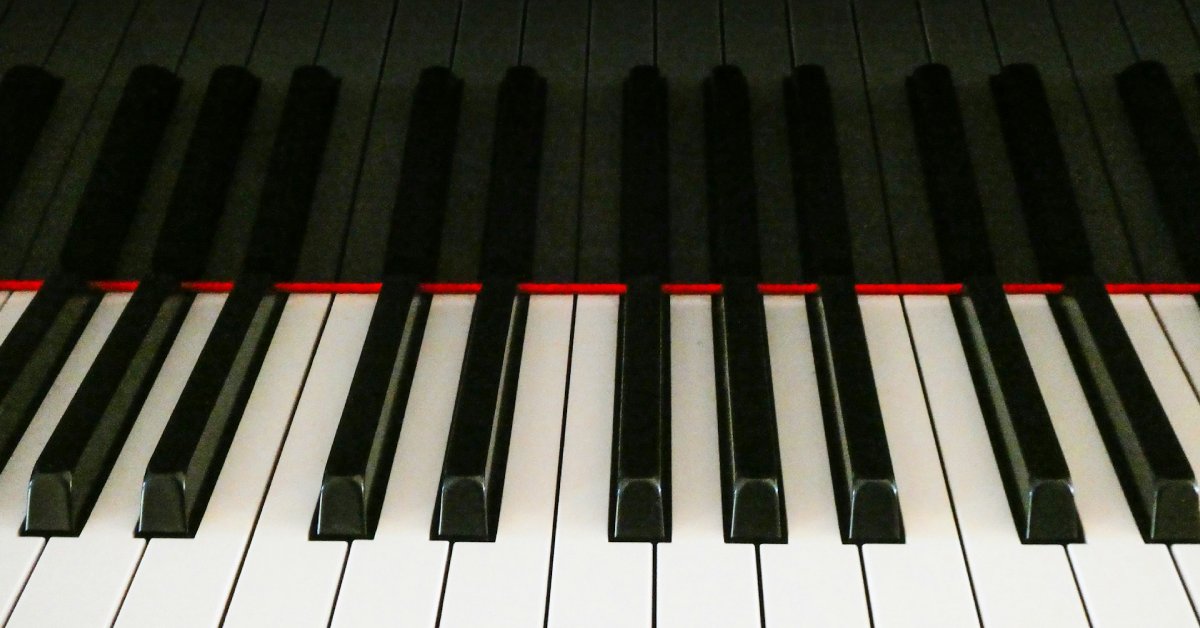
Unweighted keys feel like you are typing on a computer keyboard. They are light, and springy, and they have little to no resistance. This may be okay for synth sounds and some electronic music, but this will NOT allow your fingers to learn what a real piano feels like.
Semi-weighted keys add a bit of resistance. This is better than nothing, than the one before. But, it still won’t feel much like a real piano. These types of keyboards are common in the $150-$250 range.
Fully weighted keys (they are also called “hammer action” keys) replicate the way a real piano feels, like hammers striking their corresponding strings. It acts like a percussion instrument, heavier in the bass and lighter in the treble, like the real thing.
This matters because playing the piano (not just the keyboard) is all about controlling dynamics with how hard you press. And, making music is a lot about dynamics once you learn to play. If your keyboard behaves the same whether you press soft or hard, then you’re building habits and these won’t help you or transfer to a real piano.
The Important Bit on Keys: If you’re actually learning piano (not just playing on a keyboard), then prioritize weighted keys over how many keys because this is important. A 61-key weighted keyboard will serve you much better over time than an 88-key non-weighted one would.
Touch Sensitivity: Not Up for Debate
Whatever you buy, do make sure it’s got touch sensitivity (also called velocity sensitivity). This means the keyboard responds to how hard you press. When you play soft, then it will sound soft. If you play hard, then it sounds loud.
Keyboards without touch sensitivity all make the same volume no matter what you do. These are NOT for musicians. They will sound the same no matter how you press the keys.
You cannot learn to play keyboard music with feeling on an instrument that doesn’t respond to your own feeling. This is the bare minimum for any learning keyboard.
Old vs New: Why New Usually Wins
You might be able to get by with a used instrument here.
But like guitars, modern manufacturing has really improved budget keyboards. Computerized technology, CNC precision, newer software and software samples and much improved quality control mean that a $300 keyboard made today might outperform a $500 one from 2010. You’re usually getting better sample sounds, more realistic key action, and a better build quality.
The numbers also tell a story: U.S. digital piano sales went up from 144,000 units in 2005 to 234,000 in 2021, while traditional grand piano sales dropped from about 35,000 to just 8,000 over the same time period. Manufacturers have put all their research and design (R&D) into digital instruments, and the beginners are the biggest winners here.
Used keyboards can come with risks that beginners won’t probably begin to assess until it is too late. It may come with worn key contacts, degraded rubber components, outdated sounds, or cosmetic damage that could be hiding deeper issues.
Unless you have a friend who knows what they’re doing to look it over completely, then just go ahead and buy a new one. You will get a warranty, consistent quality, and your own peace of mind.
Try Before You Buy
This is not as important as it is with a guitar but it still might be important to you. If you can, get down to a music store and play a few keyboards – even if you don’t know any songs. Just press keys. Does the feel of the keys feel right to you? Is it too stiff, too spongy? Do the keys make noise when they snap back? Does the keyboard feel solid or flimsy?
Do you enjoy the sounds? Which sounds do you see yourself using most of the time? Would you see yourself on a stage performing with this sound?
Spend ten to fifteen minutes with the keyboard. Your hands will tell you things that a spec sheet never will. A keyboard that feels wrong in the shop probably won’t feel right at home and will have trouble separating you from your money.
The Only Accessories that You Actually Need
Don’t let anyone sell you a whole bunch of extras. Here’s what really matters on day one:
- A Sustain Pedal ($15-40) – This is a must-have. The sustain pedal lets a note ring out after you release a key. This might be essential for a lot piano pieces and it’s impossible to fake. Most keyboards don’t come with one. Buy a basic pedal because you don’t need anything fancy yet. The Nektar NP-1 or On-Stage KSP100 will do just fine.
- A keyboard stand ($25-60) – Playing on a coffee table or a desk or your bed is just a pain when it comes to your posture. You end up playing hunched over sometimes. It’s pretty obvious that an X-style stand is going to be your best option. The good news is that they are pretty cheap and adjustable. Check out the Rockjam’s Xfinity or the On-Stage keyboard stand KS7190 for some great budget options. If you do decide to go with an 88-key weighted keyboard, then you should probably get something sturdier.
- A bench or adjustable seat ($40-80) – Posture is more important than most people think when it comes to playing the keyboard. Your forearms should be roughly parallel to the floor when your fingers are on the keys. A dining chair might do in a pinch, but an adjustable bench lets you dial in the angle to exactly the right position. The Donner Piano Bench or Rockjam Padded Bench are some affordable options.
What you don’t need (yet):
Headphones – just use the built-in speakers at first and upgrade later if you need to
Music stand – most keyboards come with a built-in rest these days
Keyboard bag or case – you’re not gigging just yet
Software or apps – your keyboard’s built-in sounds are more than good enough to start with
Brands that are worth your money
Here are some dependable options at each price point
Entry Level ($150-250)
Yamaha PSR-E373 – thats a great choice if you want sound quality and touch response that wont break the bank. Yamaha is a brand you can trust, you know.\
Casio CT-S1 – this thing is sleek, portable, and has some surprisingly good piano sounds. Good if space is at a premium.\
Alesis Melody 61 – this is a pretty good value if you want to get everything you need in one box. You’ll probably end up with a stand, bench and headphones as well.
Serious Beginner ($250-400)
Yamaha NP-15 (Piaggero) – 61 semi-weighted keys that feel just like the real thing – or at least, a real piano does at this price point. Super light and portable with some premium Yamaha piano samples.
Casio CDP-S110 – this is a game-changer – 88 fully weighted keys at a price point that wont break the bank. If you want a proper piano feel without breaking the bank, try this one out
Roland FP-10 – thats a bit of a statement from Roland – the best feel under $500 on the market. Often considered one of the best keyboards around.
Committed Beginner ($400-600)
Yamaha P-125 – this is the workhorse of piano teachers everywhere. 88 weighted keys, excellent sound, built to last for years to come.\
Roland FP-30X – this thing is a real premium feel and sound with Bluetooth connectivity. A keyboard you could still be playing in five years from now.\
Casio PX-S1100 – this thing is sleek, stylish and has some of Casios best key action. Great for a modern apartment where space is a real issue.
Your first keyboard checklist:
Before you go out and spend your cash, confirm the following:
Does it have touch sensitivity (velocity response) ?\
Does it have at least 61 keys (or 76 or 88 if budget and space will do).\
Is there at least weighted or semi-weighted keys (weighted keys are the way to go, in our book).\
Does it have a sustain pedal input ?\
Are you prepared to spend a bit extra on a pedal, stand and seating – aim to spend at least $40-80 extra.
In Conclusion
What you need is a keyboard that will teach your fingers how to play and your ears how to listen to music in the right way. A $250 to $450 keyboard from Yamaha, Casio, or Roland can do just this.
Get something playable. Set it up right where it is accessible to you on an ongoing basis. Plug in a sustain pedal to it. Start playing. Start practicing. Your next keyboard is where you get a little more choosey. Your first keyboard just needs to get out of the way from you learning to play keyboard music.