



You’re not just looking to kill time behind a drum kit. You want to be part of a band, record some tracks, and, dare I say it, you want to get up on stage and rock out with a band as soon as humanly possible.
The good news is this: you have picked a great instrument to do this with.
Drummers are, hands down, the most commonly in-demand musicians in the majority of local music scenes. While guitarists and singers might be overrunning open mic nights and open auditions, bands are constantly struggling to find a reliable drummer who can keep the beat and show up when they say they will. If you learn to play drums well with a solid sense of time and a decent attitude, then you might have more gig opportunities than you could possibly handle, or shake a drumstick at.
The drum kit market shows this growing demand. It’s huge. It’s valued at over $2 billion globally, and it’s growing at about 6% a year. The growth is driven largely by new players entering music education and home recording. What’s more, electronic kits now make up about 55% of all drum kit sales. This is great news for all those urban players who never thought they would have been able to afford an acoustic kit even a decade ago.
But first, you’re going to need a kit. And drummers face a few obstacles that guitarists and keyboard players just don’t face: (1) noise, (2) space, and (3) the cost. Let’s tackle all three of these barriers to entry and get you set up for potentially becoming a real band-ready success.
Why Drummers Are So Hard to Find
Before we get into the gear, let’s talk about why drummers are so in demand. Some would say that the drum chair is the hardest seat to fill in any band. Here’s why:
First off, you need to be able to commit to some serious practice time. Most people can’t or won’t do that, which means this might immediately thin out the competition.
Second, drummers have to lug around way more gear and take more time setting it up than anyone else in the band. Loading a kit into a van at midnight after a gig is no fun, and plenty of people will bail before this process even gets started.
Third, and this is one of the biggest ones, good timekeeping is deceptively difficult. Plenty of people can thump on a drum. But, not so many can keep a steady beat for four minutes straight while throwing in fills and transitions.
If you’re willing to put in the work to overcome these barriers, then you’re already ahead of most aspiring drummers. Bands need you, recording studios need you, and worship teams need you. You get the idea. The question is, how fast can you get ready for them?
Electronic vs. Acoustic Drums: Time to Make a Choice
This is where things get interesting. Your living situation probably decides it for you.
Acoustic drums are the real deal. They have wood shells, metal cymbals, and the whole nine yards. They’re what you’ll play on stage and in most studios, and nothing electronic really comes close to replicating the experience of hitting a real kit at full volume.
Electronic drums, on the other hand, use rubber or mesh pads to trigger digital samples through headphones or an amp. They’re way quieter, take up way less space, and offer a lot more recording flexibility than acoustic kits.
Here’s the lowdown:
Choose Acoustic If:
– You live in a house with understanding neighbors and a spare room to practice in.
– You’ve got the space (and the budget) to set up a proper practice area where the noise won’t be a problem. This might be in a basement or in a rural or industrial area.
– You’re looking to develop your chops and learn to play with real drum tone.
– Your budget stretches to cover the cost of the kit and maybe some soundproofing too.
– You’re planning to gig with acoustic kits most of the time.
Choose Electronic If:
– You live in an apartment, a condo, or a small house.
– You need to practice late at night or early in the morning.
– Space is tight. Electronic kits are way more compact than acoustic.
– You want to be able to record directly into your computer without messing around with microphones.
– You just want to be able to practice without driving everyone in the house crazy.
The Hybrid Reality
Here’s the thing about seasoned drummers: most of them have both electronic and acoustic kits.
Electronic kits give you the flexibility to practice at all hours without disturbing the neighbors (or getting on the wrong side of your landlord). They also let you record like crazy, which is perfect if you’re working on new tracks in your DAW.
Acoustic kits, on the other hand, teach you how to develop real feel and dynamics. There’s no substitute for the feedback of a real snare or the wash of actual bronze cymbals.
If you want to make it in a band as a band drummer, then your ultimate long-term path likely involves both. The question is which one to buy first. And, this depends on where you live and when you can practice.
The Noise Problem: It’s a Real Problem and Not Just a Bunch of Hooey
Acoustic drums are loud. We’re talking full-volume rock concert loud. We’re talking you can hear them outside in the street and a couple of houses down at your neighbor’s house. Not “turn up the TV” loud. This would be about 90-130 decibels. It’s as loud as a chainsaw or a rock concert.
Even with practice mutes, you’re still looking at approximately 70-80 decibels. Which is just as annoying to have to put up with. Not to mention that it can be illegal in a lot of places.
This isn’t about just trying to be a good neighbor (although, yeah, you should try to be). It’s about being able to stick with drums long term. If you can only practice when the house is empty, and your neighbors are also gone, then you’re not going to get anywhere fast.
Potential noise solutions to pair with acoustic drums:
Mesh drum heads – these things can cut the noise in half.
Low-volume cymbals – Zildjian L80, Remo Silentstroke.
Drum mutes and practice pads on the kit so you can play without waking up the whole house or even building.
Rugs and acoustic treatment to soak up the sound bouncing off the walls.
Figuring out a schedule with your neighbors that works for everyone.
Even with all these modifications, you’re probably still going to be making too much noise. And if you live upstairs or next to people with thin walls, chances are acoustic drums just aren’t going to cut it for regular practice.
Why Electronic Kits Are for Real Now
Ten to fifteen years ago, some electronic drums were nothing more than a novelty, cheap pads with pretty sad sounds and almost zero expressiveness. But the times and drum technologies have changed.
Modern electronic kits from the likes of Roland, Alesis, and Yamaha have come a long way. They now feature mesh heads that respond to how hard you hit them, cymbal triggering that sounds just like the real thing, and sound libraries sampled from top-of-the-line acoustic kits. And guess what? Even professional drummers use them.
According to the latest industry surveys, 68% of musicians under 34 now prefer electronic kits over traditional drums. And it’s not just because they’re portable and let you mess with the sound to your heart’s content, although that’s a big plus. It is also because they plug right into your computer.
Want to record a demo for your band? Just connect your drum module to your audio interface. Want to practice along with songs? Plug your phone into the module’s aux input and you’re good to go in your headphones. Want to learn by watching yourself? The recording capabilities are right there.
Just this ability to record directly makes electronic kits a super compelling option for beginners who want to focus on their sound and beginning in a band.
Space Requirements: What You’ve Actually Got
Drums take up a lot of room, period. Before you go and buy anything, measure your space.
The Acoustic Drum Kit Footprint:
Minimum: 5 by 4 feet if you’re going for a super compact four piece.
Comfortable: 6 by 5 feet for a standard five-piece with plenty of room to move around.
Ideal: 8 by 6 feet or bigger and you can fit in cymbals and toms as many as you want to add.
You also need to think about ceiling height. It should be at least 7 feet for sitting comfortably, more if you’re going to be standing and/or using tall cymbal stands.
The Electronic Drum Kit Footprint:
Minimum: 4 by 3 feet for a compact model.
Comfortable: 5 by 4 feet for a full-size electronic kit.
Some models even fold up to 2 by 2 feet for storage in a corner or closet. This is a definite plus if you’re really short on space.
Electronic kits clear the space hurdle by a mile. You can sometimes fold them up and stash them away when not in use. That’s not an option with acoustic drum kits.
How Much Should You Spend on Your First Drum Kit
For electronic drums, plan on spending about $400 to 800.
For acoustic drums, plan on spending from $500 to 1,000.
In my opinion, you really don’t want to go below these price points. And to be blunt, it’ll just take you longer to get to where you want to be going with your drumming. Up above these price points, you’re likely just paying for extra bells and whistles that intermediate players would probably love, but you just won’t need on your first kit.
The Electronic Kit Budget Breakdown
Under $300: Frankly, not going to be worth it. You’ll probably get flimsy drum heads and pads that just don’t respond well. They might be a real pain to play. And, you may get hardware that just can’t handle any of your serious practice. You’ll likely want to upgrade within a year and get something that actually works for you.
$400-600: You could focus on spending this as a beginner. You’ll start to get mesh snare heads at this price point. These actually respond like a real snare. You also might get decent tom pads that make playing a little more realistic. At this price level, I would expect the sound libraries and hardware will actually hold up to regular practice or even some recording. It’s worth checking out options like the Alesis Nitro Mesh or the Donner DED-200 at about this price range.
$600-900: I would expect that a serious beginner could invest in their drumset at this level of investment. Plus, it should allow them to utilize this drumset to grow into an intermediate drum kit player. Now that you’ve got all mesh heads, cymbal pads that actually respond like a real cymbal, and hi-hat stands that actually feel like you’re sitting behind a real kit. Plus the sound libraries are actually worth something. Take a look at the Alesis Surge Mesh, or the Roland TD-1DMK.
$900 and up: Save this for your second kit because by then you’ll have a much better idea about what kind of kit you want and what’s actually worth spending money on.
The Acoustic Kit Budget Breakdown
Under $400: Not worth it. You’ll often not get the hardware you need to actually start playing, and the cymbals will just sound terrible.
$500-700: Okay, this is entry-level stuff. You get a complete kit with the shells, all the hardware, and actually a set of cymbals that don’t sound like rubbish. Worth taking a look at options like a Pearl Roadshow, a Tama Imperialstar, or a Ludwig Accent.
$700-1,000: Better quality hardware, improved cymbals, and more consistent shell quality. Gretsch Catalina, Mapex Mars, and PDP Center Stage are all good kits to check out in this price range.
$1,000+: Good if you’re a serious beginner. But honestly, it’s just not worth it on your first kit. You’ll be better off saving your cash for a second kit and getting something that actually blows you away.
Shell Packs vs. Complete Kits: What’s Actually Included
This is one of those tricky things that confuses everyone buying a drum kit for the first time. So pay attention. It really makes a difference.
A shell pack includes:
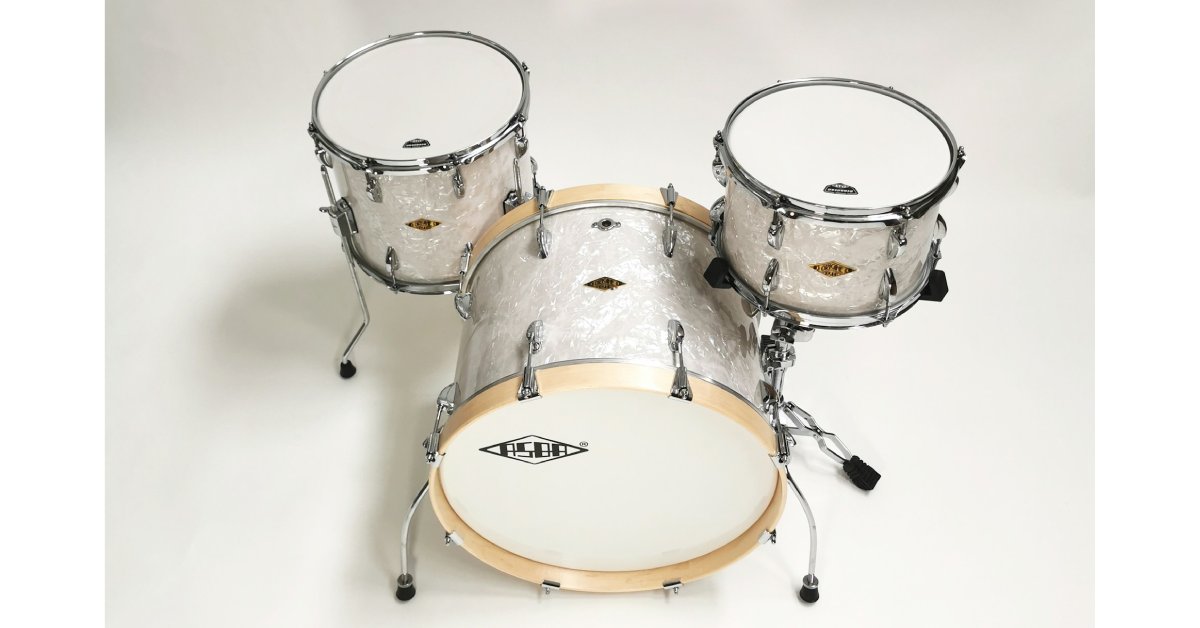
A shell pack usually includes the shells that is the sides of the drums, the hardware for each drum including hoops, lugs, and legs or rack tom mounts. Also, the heads are usually included. These are the tops and bottoms but sometimes might be cheap ones. Here, are the drum types that are usually included:
Bass drum
Snare drum
A couple of mounted toms (usually)
Floor tom
A shell pack does NOT include:
Cymbals (hi-hats, crash, ride)
Cymbal stands
Hi-hat stand
Snare stand
Bass drum pedal
Throne (seat)
So, if you buy a shell pack, you’re going to be spending another $300 to 600 on hardware and the cymbals to actually play the drumset. This is not going to be ideal if you’re a first-timer. Shell packs can make more sense for people who already have all the hardware and they are looking to upgrade their current drumkit, not for beginners.
A complete kit includes:
Full Set of Drums (Get yourself a full drum kit if you want to avoid a whole lot of budget headaches.
Basic Cymbal Kit (Hi-hats and a crash and/or ride cymbal).
Hardware: You’ll need all the necessary stands, a bass drum pedal, and a drum throne. Unless you just enjoy the suspense of not knowing what’s going to go wrong.
Check and verify before you buy the whole drum kit because one or more of the pieces might be missing and then you will have to buy it separately.
The Main Accessories You’ll Actually Need (On Your First Go Around)
Don’t try to buy everything all at once, though. Sometimes, it might make since for a student to start with the below items before getting their own drum kit. I’ve used this technique before when teaching.
- Drumsticks ($8-15 apiece)
- You’ll want to start with a decent 5A wood tip is the standard for beginners. Although you might want to go with a plastic tip. I have taught some students who I started out with a size 2B drumstick. Vic Firth, Promark, and Vater are all solid brands that can get you started within this price point. Get at least two pairs, because you’re likely bound to break a few. Later, you might get a drumstick bag after you start playing out or at school.
- Practice Pad ($15-40)
- Even if you’ve already got a full kit at home, get yourself a practice pad so that you can work on your rudiments and hand technique. I have started students who were on a budget with just a few items: drumsticks, practice pad, and maybe something else. You can practice in the bath, at your desk, or on a hotel room floor. Be aware of your actions and try not to tick anybody off with your consistent tapping because that way you will be able to practice more often. Evans RealFeel and Vic Firth Single-Sided are a couple of the go to pads here.
- Metronome or Click App (Free-$30)
- Time needs to be your best mate when you’re drumming. You can’t develop good timing without a metronome and it’s not a skill you can develop with a carefree attitude. Free apps like Pro Metronome work perfectly well, but if you want a bit more then you can splash out on a hardware metronome like the Boss DB-90. Boss makes some good ones and different price levels with different functionality.
- Hearing Protection ($15-40)
- This is not optional. Your hearing will get damaged with all the drumming you’ll be doing. You can get away with using basic foam earplugs, but they’ll muffle the sound and you might as well be plugging your ears with a handful of cotton balls. Get some earplugs that have been made specifically for drummers. Earasers, Etymotic, and Vic Firth all make great ones. I have also used one size fits all earplugs as well as more custom sized ear plugs. As well, I have also used ear plugs made specifically for construction workers and weapon shooters.
- Drum Key ($5-10)
- You’ll want a drum key to tighten up your drums and make adjustments to the hardware. Don’t bother getting just one because that just might mean that you’ll lose it in no time.
What You Don’t Need Yet (But Will Eventually Want to Get)
Don’t bother buying extra cymbals yet. Just master the basics and the fundamentals, first.
Forget about a double bass pedal for now and stick with a single pedal to develop some good technique.
Drum rugs are nice to have if you have a big kit but they’re not essential yet.
Be patient with the drum cases and bags. You don’t need them yet unless you are lugging your kit around, then you’re not going to be gigging just yet.
I said the above but I have known some teachers to make their students lug in their own kit and set it up for every lesson or practice session.
And for goodness sake, don’t buy any spare snare drums just yet. This can be addicting and take your money that you don’t mean to be spending. You’ll be perfectly fine, for now, with just one snare drum.
Electronic Kits Worth Spending Your Money On
If you’re after some quality electronic drums that will get you started quickly, here are some great options to consider:
Basic Starter Kits ($300-500)
The Alesis Nitro Mesh is a top pick for beginners – a mesh snare, good quality module, and all the bits and bobs you need.
The Donner DED-200 is another great option. It’s a bit like the Nitro but at a lower price point. It’s the best value on the market right now.
Serious Beginner Kits ($500-800)
The Alesis Surge Mesh is where the Nitro’s upgrade option starts. This kit is far more advanced but still great value for money.
The Roland TD-1DMK is an electronic kit worth looking at from Roland, but it’s still pretty pricey. But the quality is top-notch and it’s a serious machine.
The Yamaha DTX402K is a great option if you want some built-in training features that will help you learn your craft.
Advanced Kits ($800-1,200)
The Roland TD-07KV is basically a good choice in this range, kit-wise. Professional quality and everything you need to keep up with a live band.
Acoustic Kits Worth Spending Your Money On
If a full electronic kit isn’t your thing then these acoustic kits deliver the complete package with no hidden extras.
Basic Starter Kits ($400-600)
The Pearl Roadshow has been a top seller for years now. It’s a safe bet.
The Tama Imperialstar is a great option if you want something a bit better built, with good quality cymbals, and all the hardware that you need.
The Ludwig Accent is a more affordable version of the Ludwig kit that will give you a top quality sound.
Serious Beginner Kits ($600-900)
The Gretsch Catalina Club is where the real money starts to make sense. I used to have one of these. It’s a kit you can gig with for years.
The Mapex Mars has got a few bells and whistles on the hardware front, and the sound is top-notch.
The PDP Center Stage is a great entry point for anyone who wants to build a kit themselves.
Getting Ready To Play In A Band – The Fast Track
You want to start playing in a band ASAP. Here’s a realistic timeline for you and what to focus on:
Month One to Three: Learn The Basics
First things first, you need to master the basic rock beat (kick drum on the 1 and 3, snare on the 2 and 4, eighth notes on the hi-hat) at fast tempos at various speeds (70 to 120 BPM).
Simple fills (one beat or two, just to give you a little variety).
Knowing how to start and stop cleanly, no awkward transitions.
Months 4-6: When the Words Start to Flow
Working out variations that last more than just a beat or two.
Phrases that go on for 4 bars, maybe with a little fill in there to keep things interesting.
Basic dynamics (so your quiet verses don’t sound like loud ones).
Playing start to finish with simple songs.
Months 6-12: You’re Band-Ready Now
Mastering 10 to 15 songs from memory (no need to look at the sheet music).
Keeping steady time without even needing a metronome.
Reading some basic music charts or picking up on verbal cues.
Transitions between parts should be done smoothly.
Setting up, and then tearing down, your kit as quickly as possible.
Most beginners who can put in the time (30 to 60 minutes a day, every day) can actually join a band within 6 months to a year. And don’t worry if you’re not the best drummer, yet. We don’t need you to be that good. Just be reliable, keep a steady beat, and remember to play for the song.
Record Yourself. Right Now.
Don’t wait until you think you’re ‘good enough’ to start recording yourself. Recording is a vital tool for practice, not just a means to make your music sound nice.
With an electronic drum kit: just connect your module to your computer. Most modules will send out a direct audio feed that you can record into whatever music software you’re using. It’s usually a Digital Audio Workstation (DAW) like GarageBand, Reaper, Logic, Ableton, this sort of software. That’s the easiest way to get started with recording.
With an acoustic kit: you’ll need at least one mic and a way to get that sound into your computer. A good starting point is a single overhead condenser mic (probably about $100- $200) hooked up to a basic Audio Interface (about $100-$150). It won’t sound like a million bucks, but it will get you started. You’ll be able to hear yourself, pick up on your problems, at least get some ideas down, and change and get better.
Get to recording every week. Look out for timing issues, dynamics that are all over the place, and dodgy transitions. A camera doesn’t lie, and most of us tend to overestimate just how consistent we are until we hear it back.
The Drum Kit Shopping Task List
Before you even think about making a purchase:
1) Make sure you’ve got enough space and the kit will actually fit.
2) Honestly consider your noise situation (are you in an apartment? electronic kit it is).
3) Make sure it’s a complete kit with all the bits and bobs included.
4) Budget around $400-800 for electronic or $500-1,000 for acoustic.
5) Add another $50-100 for sticks, a practice pad, hearing protection, and a drum key.
6) Make sure you’ve got a plan for regular practice time because you’ll need it
The Lowdown
Your first drum kit needs to be playable, quiet enough for you to play without disturbing others, and have all the bits you need to get going without having to go hunting for parts.
If you live in an apartment or need to practice at odd hours, an electronic kit is probably the way to go. They’re great for recording and you can practice at any time, anywhere.
If you’ve got the space and don’t mind the noise, an acoustic kit is a great choice. There’s something about the feel of playing on real drums that’s hard to beat. And, you’ll find it’s what most stages and studios use.
Either way, show up to practice, get the timekeeping right, and remember to listen to the music around you. That’s what gets you picked for a band. The gear is just the start.