



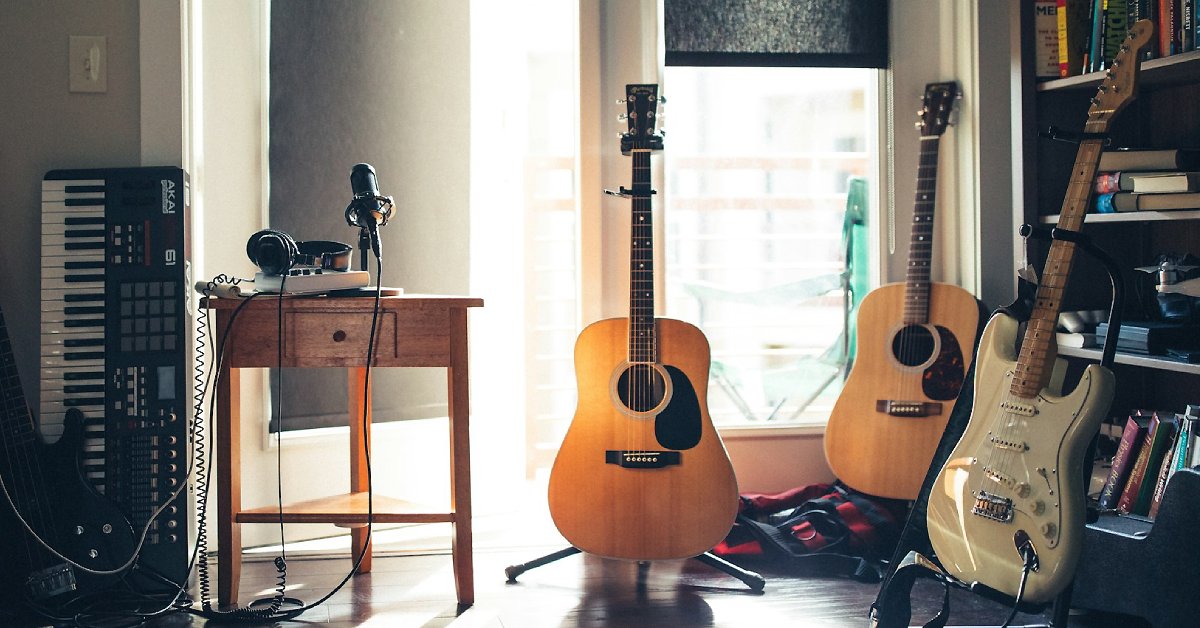
Start with the guitar that makes you want to pick it up and play it every day.
This is crucial because, according to Fender, a top seller of guitars, 90% of beginner guitarists quit within their first year. The biggest factor in beating those odds isn’t which type you choose, but whether you actually like to play it and enjoy playing it.
Think about what is already on your playlist. What music do you actually listen to and gets you excited? Picture a guitarist in one or some of those songs. Are they holding an acoustic guitar or plugging an electric guitar into an amplifier (amp)? This instinct might be your best guide.
Fender’s research also found that 72% of new players pick up the guitar simply to gain a life skill or for their own personal enjoyment. They’re not looking to become rock stars. So, follow your own taste, not someone else’s idea of what a “real guitarist” should play.
This is to help you decide:
Choose Acoustic If:
You are drawn to singer-songwriters, folk, or campfire music. Acoustics will require no extra gear. You can just grab it and play it whether you are camping outside or going over to a friend’s house. The steel strings do build finger strength faster, and you’ll learn to make the guitar sound good on its own without any effects or amplification. This can be a great choice if you are planning to write your own songs later.
Choose Electric If:
Rock music, the blues, or heavy metal gets you excited. Electric guitars have thinner necks and lighter strings, which many beginners find more comfortable. Those lighter strings are also easier to press down until your fingertips build calluses from practice. You’ll need an amplifier (amp) to get the right sound, but even a small practice amp works fine to start. And, this style of guitar and strings combination (combo) might add to your playing speed a little more quickly.
The Real Truth
The “acoustics first” rule is way outdated. Learning fundamentals transfers between both types. What matters most is playing something that sounds like the music that you love. If you’re forcing yourself through folk songs when you really want to play like Jimi Hendrix, you’ll probably quit before you actually get any good at playing.
One Practical Note
Budget often decides this anyway. A decent beginner acoustic costs less upfront since you skip purchasing an amplifier. But, if electric is your dream, don’t let an extra $50 to $150 for a starter amplifier talk you out of it. Now, you know what to aim for.
Make Sure It Fits
Whatever you choose, pick a guitar where your arm can comfortably reach all the way up and down the neck. If you’re stretching awkwardly to hit the first fret, try a smaller body or shorter scale length. Acoustic guitars, in particular, can be bulky. A full-size dreadnought might overwhelm a smaller-framed player. If you have a smaller frame, then look for parlor, concert, or 3/4-size models designed for kids and adults who need something more manageable. Yamaha even has an excellent sounding half-size guitar. A guitar that fits your frame makes practice feel natural instead of like a wrestling match.
Pick the guitar that matches the sound in your head. Move forward by practicing at least 15 minutes each day. Your music and your type of guitar can be your motivation every time.